A top OSHA and worker safety blog from industry veterans. Read the latest OSHA news and find critical safety tips to keep your workers safe. Check Often!
OSHA News & Workplace Safety Blog
-
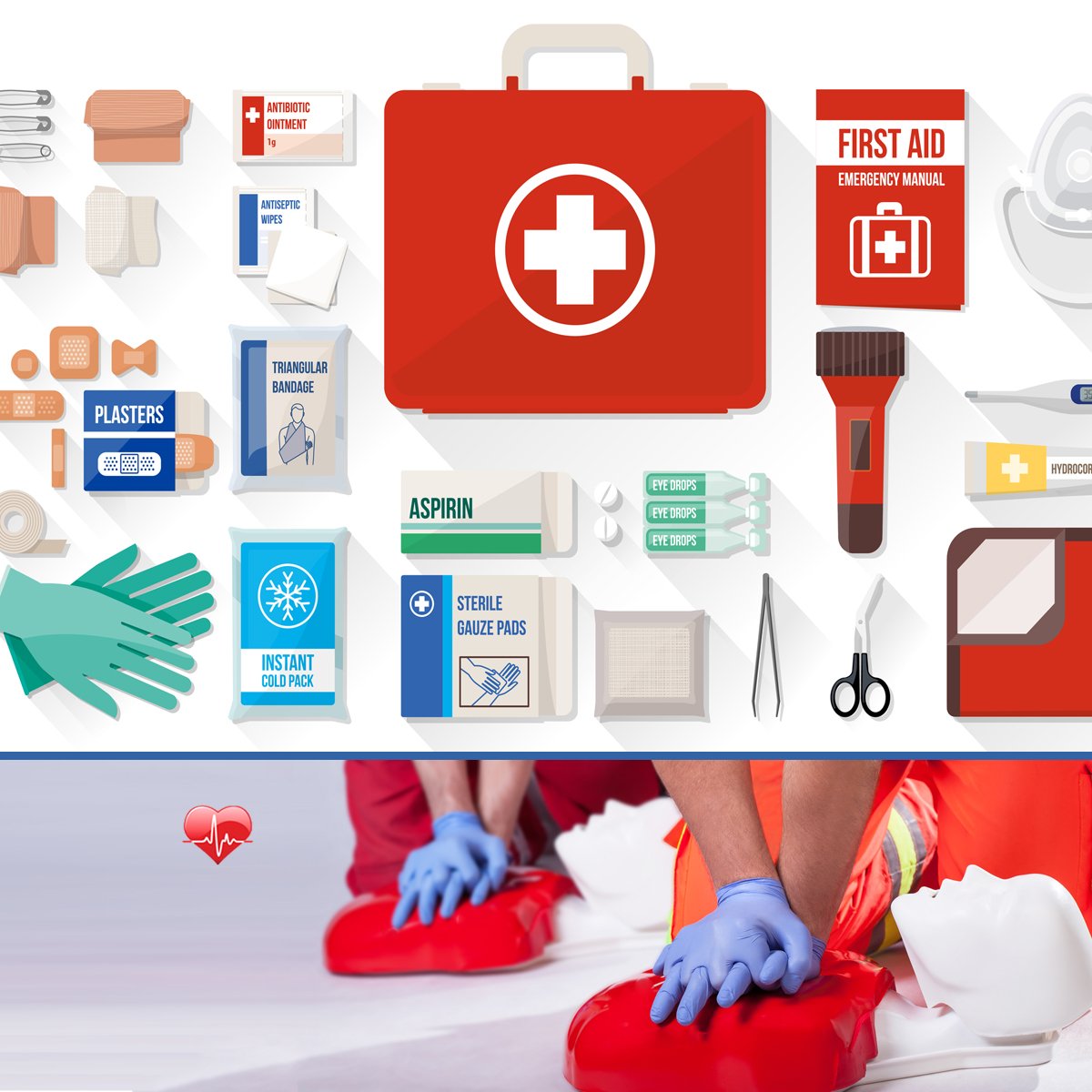
First Aid/CPR Requirements for Employers
Does OSHA Require First Aid/CPR Training? Many employers today wonder what the requirements are when it comes to training their employees in First Aid/CPR. Is it, or is it not required? Will employers be held liable or at fault if none of their employees are trained? What is the right thing to do?
-

What You Need to Know for the Year Ahead
OSHA has been busy this last year issuing several significant updates and new rules regarding workplace safety. Employers must stay ahead of these changes to ensure compliance and foster a safer, healthier work environment for their employees. Here’s a rundown of the key updates for 2024 and beyond!
-

Emergency Action Planning
-

Can you Really get Hurt at the Office?
The leading type of disabling accidents that occur within the office are the result of falls, strains, overexertion, falling objects, striking against objects, and being caught in or between objects. One would normally expect the office to have the least amount of hazards, but in reality, they are just as common as outside in the workplace.
-

Using Affirmative Defense With OSHA
Affirmative Defenses A defense in which the defendant introduces evidence, which, if found to be credible, will negate criminal or civil liability, even if it is proven that the defendant committed the alleged acts. From the perspective of the Occupational Safety and Health Administration (OSHA), an affirmative defense is a claim that if established and found to exist, can help to potentially rescind a citation that an employer received. Three Most Common Affirmative Defenses: Unpreventable Employee Misconduct or “Isolated Event” Defense Impossibility/Infeasibility of Compliance Defense Greater Hazard Defense Any defense you wish to argue must be brought up at the informal conference or hearing. If you raise an affirmative defense, the Area Director, CSHO, or Judge may require you to provide certain documents supporting your defense. Example: If you claim that an employee acted in a way that is forbidden by your company’s written work rules, you will be required to provide a copy of those rules and provide evidence that the employee violated those rules. Unpreventable Employee Misconduct or “Isolated Event” Defense When you argue that a violation occurred because of employee misconduct that you could not have prevented, you must demonstrate all of the following elements: A work rule adequate to prevent the violation was in place; Effective communication of the established work rule to employees; Methods for discovering violations of the established work rules; and Effective enforcement of established work rules when violations are discovered If you fail to establish and provide evidence of ALL of these four elements, your defense will fail. Impossibility/Infeasibility of Compliance Defense An employer argument that compliance with a particular standard was simply not possible or would prevent performance of required work, and reasonable alternative steps were taken to protect employees. To demonstrate this defense, you must show that: Compliance with the standard’s requirements is functionally impossible, or would prevent workers from completing required work, and There are no feasible alternative means of providing equivalent protection for workers and reasonable alternative steps for protection were taken. If you fail to establish either of these things, your defense will fail. Greater Hazard Defense When an employer argues that complying with the standard would have created a greater hazard than noncompliance, and the employer took reasonable alternative steps to protect employees. To demonstrate this defense, you must show that: Compliance with the standard would result in greater hazards to employees than noncompliance, and There are no alternative means of employee protection that would be as effective, and Reasonable alternative steps for employee protection were taken. If you fail to establish any of these things, your defense will fail. For all Affirmative Defenses, the burden of proof lies with the employer to prove any affirmative defense through documentation of facts and evidence. Note: This article is being provided for guidance and should not be considered legal advice. For professional assistance, please call us at (724) 776-1003.
-

OSHA Requirements Guide for Employers
What Does OSHA Require From Employers? If you have ever visited OSHA’s website, you know there is so much information posted regarding the different safety and health requirements employers must follow in order to keep their employees safe on the job. We are going to breakdown the key rules and regulations starting with the top 3 basic duties for employers. Three Key Elements: Compliance with OSHA laws. Provide a workplace free from serious recognized hazards. Examine workplace conditions to ensure compliance. The foundation of a successful safety program is compliance with OSHA laws. Part of the LSCI approach is to stress the importance of creating a good safety culture at your workplace. Why Comply With OSHA’s Regulations? Ethical: Employers should feel a moral obligation to keep their employees safe on the job. “We don’t want anyone to get hurt, do we?” Legal: The obvious reason for employers to comply with OSHA regulations is because it’s the law. “We want to comply with the law, don’t we?” Business: It costs less to be pro-active vs. reactive. “We want to minimize expenses and maximize profits, right?” If you’re a safety professional trying to convince upper management of the benefits of investing in a safety program, check out our Business Case for Safety e-book or call one of our consultants at (724) 776-1003. OSHA’s General Duty Clause Every employer should be familiar with OSHA’s General Duty Clause because it really is all encompassing. OSHA can issue a citation for any safety hazard under the General Duty Clause even if it is not specifically spelled out somewhere else in the regulations. It requires employers to protect employees from any safety hazard they may encounter, including those that aren’t specifically listed in OSHA’s regulations. (a) Each employer — (1) shall furnish to each of his employees employment and a place of employment which are free from recognized hazards that are causing or are likely to cause death or serious physical harm to his employees; (2) shall comply with occupational safety and health standards promulgated under this Act. (b) Each employee shall comply with occupational safety and health standards and all rules, regulations, and orders issued pursuant to this Act which are applicable to his own actions and conduct. OSHA Compliance Requirements Checklist Comply with OSHA’s standards. Post the free OSHA workplace poster and encourage employees to read it. Provide a workplace free from serious recognized hazards. Conduct hazard assessments. Maintain up to date written safety and health programs including procedures. Employers must provide safety training in a language and vocabulary workers can understand. Provide access to Safety Data Sheets (SDS) when employees use hazardous chemicals. Train employees on what chemicals they are exposed to. Use and maintain safe tools and equipment. Provide warnings of potential hazards including signs. Report all work-related fatalities within 8 hours to OSHA. Employers with more than 10 employees must keep records of work-related injuries and illnesses. Post the recordkeeping 300A form from February 1 to April 30 each year in a prominent location at your workplace. Submit electronic injury and illness records if your workplace is required. Provide access to employee medical records and exposure records to employees or their authorized representatives. Do not discriminate against employees who exercise their rights under the Act. See OSHA’s “Whistleblower Protection” webpage. Post OSHA citations at or near the work area involved. Each citation must remain posted until the violation has been corrected, or for three working days, whichever is longer. Post abatement verification documents or tags. Correct cited violations by the deadline set in the OSHA citation and submit required abatement verification documentation. A successful safety program needs to be nurtured. Top 10 Reasons to Partner With an Award Winning OSHA Consulting Firm OSHA compliance does not need to be confusing or take up every moment of your day. The advantages of having a third party safety consulting company by your side include: Professional consultants with various certifications and qualifications that know OSHA’s rules and regulations. Have a hazard assessment conducted without having any citations issued. Get a safety and health training delivered on just the topics you need. It is cheaper than hiring a full time safety person or can provide assistance to an overloaded safety manager. Shows your employees that you truly care about their safety and well-being which will boost morale! Gives you the peace of mind knowing you have experienced support available and shows OSHA that you are operating in good faith. Issues safety and health news alerts and OSHA regulation changes. Helps create a safer workplace for your employees and builds a safety culture. Will help to prevents or reduce accidents, injuries and potential OSHA citations. OSHA can offer employers a “good faith” discount for hiring a safety company. First, strive to meet OSHA’s requirements. Then, work to maintain them. Next, go beyond the safety standards! Contact Lancaster Safety for a free, no obligation phone consultation today! Related Article: Why OSHA Supports Third-party Safety Consulting Companies *This list and blog article are being provided for guidance only. It does not contain every OSHA requirement and should not be taken as legal advice. Please call Lancaster Safety at (724) 776-1003 for direct advice.
-

Are You Posting Safety Violations Online?
Are Your Worksite Pictures Sending the Wrong Message? © Creative Commons Zero
-

Safety Committees & Workers’ Comp Premiums
Why are insurance premiums on the rise?
-

3 Important Steps for Safer Scaffolding
Image Source: Unsplash.com
-

What is BBS and HOP?
Subscribe
-
7 Tips for Effective Safety Training Meetings
Stop Boring Your Safety Training Audience with These 7 Effective Tips How do you turn around an unresponsive audience & have a great classroom safety training session or safety committee meeting?