A top OSHA and worker safety blog from industry veterans. Read the latest OSHA news and find critical safety tips to keep your workers safe. Check Often!
OSHA News & Workplace Safety Blog
-

An Open Letter to Anyone Who Doesn’t Take Safety Seriously
How Following OSHA Rules — and Taking Safety Seriously — Saves Lives in the Workplace When a worker was killed after a crane fell, crushing the man, an OSHA inspection showed that the accident could easily have been avoided by extending outriggers designed to keep the crane from tipping. It was a simple step that would have only taken a few moments to put in place and would have saved that man’s life. In total, OSHA found 13 serious violations during that inspection, levying $70,000 in fines on the company. But for that employee, no amount of fines will bring his life back. On that day, he left home that morning, having no idea he would never come home again. A tragedy that never should’ve happened. The Facts Don’t Lie Since OSHA began in 1970, the lives of hundreds of thousands of workers have been saved. The year before OSHA was created, there was a little more than 56 million workers in the United States and 14,000 of them died on the job annually. Today, the number has swelled to more than 163 million workers, yet there are 9,000 fewer workplace deaths annually, even though the workforce has more than doubled. This is a testament to the fact that inspections work. While the rate of fatalities in the workplace have been diminished, there is still a long way to go. OSHA rules are put in place for a reason, but those rules are only as good as the people who implement them. Following operating instructions, training employees and supervising the work is vital in keeping your workers safe. Ignoring them can have deadly consequences. Once a hazard is identified, that is only the beginning of the process. The real work involves continued diligence in the form of education and inspections to make sure employers and workers are adhering to established safety protocols — or face the penalties. Raised Penalties Equal Higher Standards for Safety In 2019, OSHA enforcement raised the penalties to $13,260 per violation (up from $12,675), $132,598 for repeat or willful violations (up from $126,749). But not all companies have to face penalties before taking action. In fact, more and more business owners have seen the positive impact of safety inspections and have even begun participation in OSHA’s Voluntary Protection Programs. These are companies that have improved workplace safety in a proactive manner, seeking to head off hazards before they ever arise. If we don’t learn from past mistakes, we are doomed to repeat them again. Prior to 1970, workplace regulations were less stringent, and in many cases, non-existent, something that resulted in the preventable death of thousands, such as March 25, 1911, when a fire broke out in the Triangle Shirtwaist Factory in New York City, and on April 16, 1947, in what has become known as the Texas City disaster. These days, thanks to OSHA regulations and tools, not only are evacuation routes mandatory and substances like ammonium nitrate known to be hazardous, but OSHA continues to release updated information and policies to ensure complacency never sets in. Not using this knowledge to improve safety is intolerable. Instead of looking at the workers simply in terms of cold statistics, perhaps we should be looking at them as husbands, wives, sons, daughters and friends. Perhaps then the importance of each and every person’s life can truly be appreciated and protected.
-
Confined Spaces: Seeing Beyond the Entry
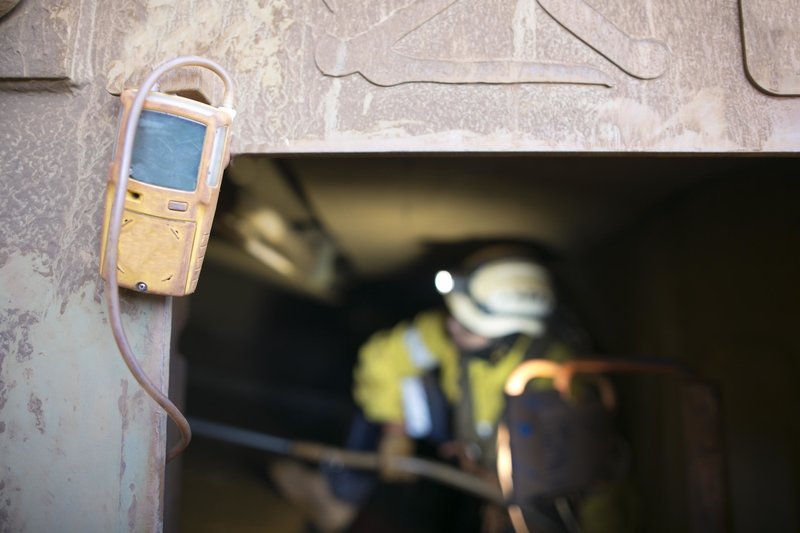
When it Comes to Confined Spaces, There’s No Room to Skip on Safety Precautions. In January 2017, a utility worker in Key Largo, Florida, opened a manhole cover and went under a recently paved section of road to investigate why it had settled unevenly. When he stopped responding to coworkers above ground, a second worker went in to see if he needed help. When both stopped responding, The Washington Post reported, a third man entered. What none of these workers knew is that years of vegetation had been rotting underneath the surface, creating a poisonous gas. All three workers were overcome by hydrogen sulfide and methane, causing them to asphyxiate. These three men lost their lives and two firefighters sustained injury that required medical attention because the danger was not identified before entering. While many people wouldn’t consider working in a confined space as a work hazard, this situation in Key Largo — as well as numerous multi-million dollar settlements — beg to differ. Confined space work is often dangerous because the hazards that exist aren’t obvious. But without due diligence, these unseen issues can escalate into a deadly situation in seconds, which makes proper training crucial. Tunnels, storage tanks, culverts, grease pits, trenches, shafts, crawlspaces and manholes are just some of the places that fit into the category of a confined space. What is Considered a Confined Space in the Workplace? A confined space is an area that is a small space with limited entry or exit points. It is large enough for an employee or employees to enter and work, but is tight and not designed for long-term occupancy. OSHA has two classifications for these work environments. They are non-permit confined spaces and permit required confined spaces. OSHA explains it like this. A non-permit required space has all of the descriptions above. While a permit required confined space has all of the above descriptions as well as at least one of the following hazards. Contains or has the potential to contain a hazardous atmosphere. Has walls that converge inward or floors that slope downwards and taper into a smaller area that could trap or asphyxiate an entrant. Contains any material/substance that poses an engulfment/entrapment hazard. Contains or has the potential to contain any other serious safety or health hazard. Spot the Dangers Before They Spot You. Dangers that exist in a permit required confined space include, but aren’t limited to, asphyxiation due to limited oxygen or hazardous gases, explosion, electrocution, engulfment, moving machinery, collapse, rescuers being injured, and falls. Failure to classify an area as permit required and taking the proper precautions can be costly to the worker and has the potential to financially ruin a company. Whether physical or atmospheric, the dangers of confined space work cannot be ignored. Neglecting to inspect, monitor and address potential hazards before and during work cannot be tolerated. Every year, lives are lost while working in these small spaces. On average, two workers a week in the United States will die after entering a confined space to work. But it doesn’t have to be that way. Training Doesn’t Just Educate Employees, It Can Save Lives. Through proper training and certification, workers can greatly reduce and even eliminate the risk of fatalities. A trained crew evaluates and understands the hazards they may face and communicate these dangers with each other. If the hazard cannot be removed from the work space, proper precautions and equipment must be utilized to keep the worker safe until the job is completed. It is vital that the workers inside the confined space are in constant communication and monitored from outside where the team understands the dangers and remain alert for any symptoms of distress so an immediate extraction can be implemented at the first sign of trouble. Trained workers also know when to call for emergency assistance in the event that a worker is adversely affected by seen or unseen hazards. Getting timely treatment for a person is often crucial in ensuring a faster recovery. Experts caution to take the time to put safety protocols in place. After all, nobody wants a confined space to turn into a final resting place. For all of your training needs, call us today at (724) 776-1003 or visit our Services Page!
-

Safety After an Accident
-

Beat the Heat – Safety Cheat Sheet
Keeping You and Your Crew Safe As the summer months get into full swing, heat stress and other heat-related illness become a concern for workers across the country. Heat stress can lead to heat stroke, heat exhaustion, heat cramps, or heat rashes. Heat can even increase the risk of injuries in workers since it can lead to sweaty palms, fogged-up safety glasses, or dizziness.
-

Mental Health in the Workplace
A Trillion Dollar Topic Considered a taboo subject in the workplace 30 years ago — something that was talked about in hushed tones around the water cooler and often referred to incorrectly as “a nervous breakdown” — the truth is that anxiety, depression and other mental health disorders are no longer looked upon with the same scrutiny as years past. Mental Health challenges are now recognized as very real, very treatable, and things very normal people deal with. Fortunately, there is a wealth of options available these days to help people overcome these issues, but getting employees to actually use these resources can prove difficult. According to the World Health Organization, more than 300 million people suffer from depression, the leading cause of disability, costing an estimated $1 trillion annually in lost production. Whether it is lack of productivity while on the job, or absenteeism, a company’s bottom line is negatively affected when an employee is under mental duress. For this reason, more and more companies are realizing the financial benefits of improving employee wellbeing. Breaking the Stigma Forward-thinking companies recognize that investing in employee mental health is every bit as important as physical health. But because of the stigma attached, it’s not always easy for an employee to open up about their struggles with supervisors or other co-workers. Often this barrier can be removed when a corporate leader opens up about their own issues, creating a safe environment for people who no longer feel the need to hide these issues. Sometimes, just the relief of not having to try to hide it anymore actually relieves some of that anxiety. It can actually be liberating, particularly when you discover you are not alone and learn that some of the people you interact with every day have dealt with or are currently enduring the same problems. There’s an untapped strength in admitting it and facing it head on. Whether it’s anxiety disorder, depression, attention deficit/hyperactivity disorder, bipolar, or any number of mental challenges, all can be improved with professional help. Postpartum depression, Seasonal Affective Disorder or Post-injury depression are all recognized conditions that respond well to treatment. How an Injury Can Affect Mental Health Post-injury depression for instance is an under-reported, yet very prevalent condition. Anxiety over the injury, lost wages and worrying about whether their job will remain when they return are very real concerns. Companies with solid policies for employees on leave are vital in the recovery process, including keeping in regular contact with the injured employee so this person knows they are not forgotten. Spreading Awareness in the Workplace Most businesses in this day and age take mental health issues seriously, addressing the hazards of stress, fatigue and anxiety. Making managers and employees aware of the signs of a coworker struggling, such as weight changes, withdrawing from others, changes in appearance or attitude, are all very important. Identifying the issue and having a solid plan in place so help can be offered promptly is vital to recovery. But the employer can only do so much. Reports show that less than half of the people who could benefit from mental health treatments available to them actually take advantage of it due to an antiquated feeling of embarrassment that is a remnant from a way of thinking that is decades old. Put quite simply, Mental Health needs rebranded so that everybody feels comfortable enough to seek help when needed so they can live life to its fullest.
-
OSHA’s National Emphasis Programs
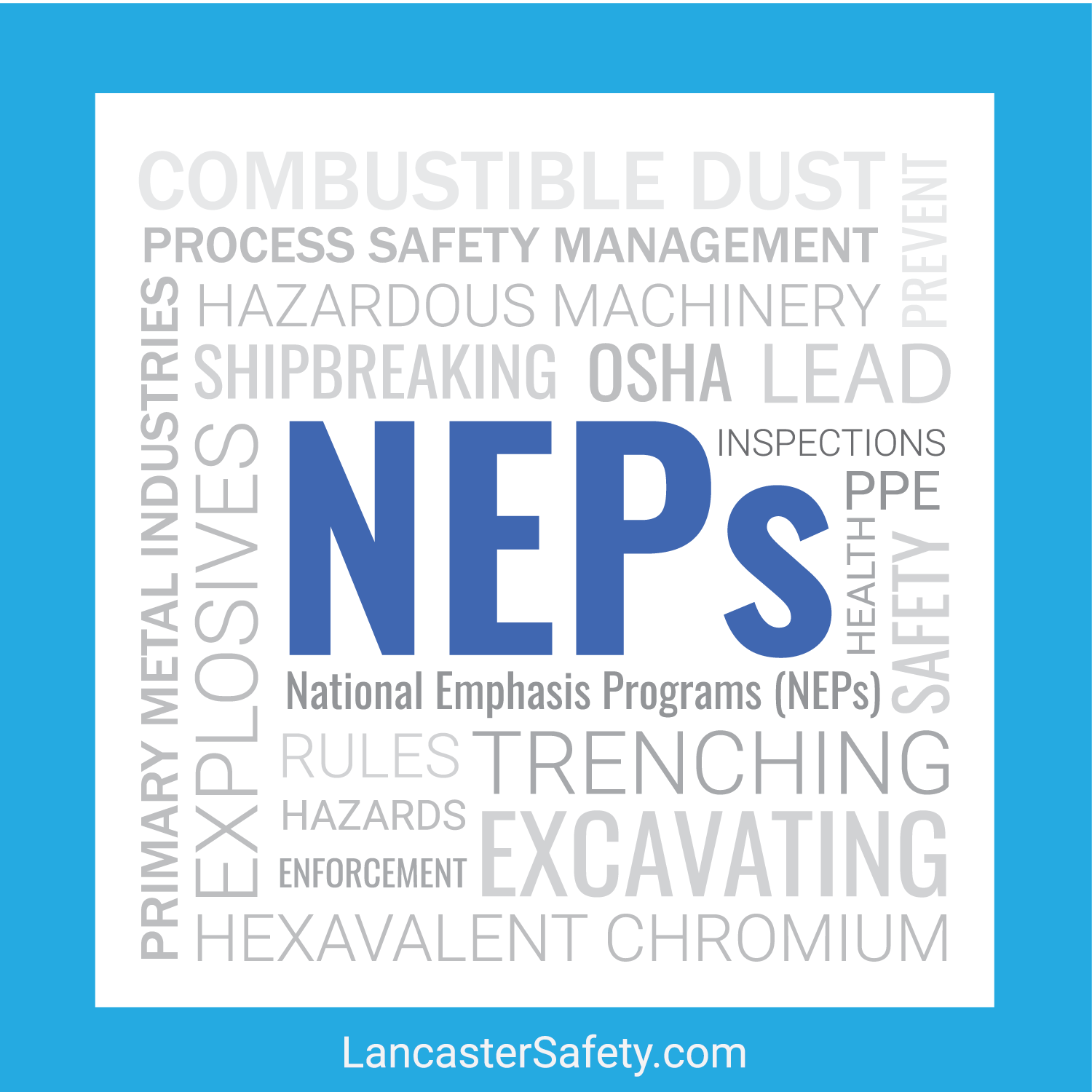
High Risk Industries OSHA is Targeting for Inspections Many have heard about National Emphasis Programs (NEPs), but few actually understand just how far-reaching these programs are and what they are actually designed to accomplish. These are temporary programs that allow OSHA to concentrate their resources on specific hazards, both existing and new, in an effort to curb and hopefully eliminate the rate of occurrence. By using the latest data and resources available to evaluate specific hazards and focus on solutions, the goal is to identify potential risks and put protocols in place to secure the safety of the workplace. OSHA provides compliance assistance resources in the form of printed, online, video and audio instruction on safety for both employers and employees to ensure a safe work environment. Here are some examples of what the National Emphasis Program is all about: Combustible Dust has been a point of emphasis for OSHA. Defined as material composed of particles that present fire or deflagration hazards, every year workers are injured from combustion. In this type of situation, the National Emphasis Program directs experts to examine the results from accidents, conduct inspections and create a plan to address that specific hazard in an attempt to eliminate potential safety threats. A National Emphasis Program can focus on a variety of scenarios, such as Hazardous Machinery and the dangers of amputations for workers. Even in an instance where no accident has occurred, by just exposing employees to hazards, a company is subject to substantial fines and penalties. Currently, OSHA has a program that will continue through at least September, with a goal to reduce risks for people who work around dangerous machinery, including ongoing training and warning signs. Shipbreaking has long been a focus of OSHA as they constantly update protocols to ensure the safety of workers in shipyards. The goal is to protect employees from a bevy of hazardous materials during the dismantling and recycling of ships, such as asbestos and lead exposure, among many other dangers. Safety Issues can be Anywhere Risks aren’t simply limited to inside factories or on company property. Safety issues can exist anywhere and employers must be aware of the potential dangers and address them or face the consequences. According to OSHA, a recent spike in trenching fatalities prompted the National Emphasis Program into action. Exposing workers to unsafe cave-in risks while working in or inspecting trenches has deadly consequences every year. Trench collapse is a daily risk on building sites around the world. Invisible threats are also a focus of OSHA as unseen dangers that have long term effects Dangers of Chromium 6 Made famous in the movie Erin Brockovich starring Julia Roberts, hexavalent-chromium, also known as chromium 6 which is a rust suppressor, ended up contaminating the drinking water in a California town with potentially toxic carcinogens. The case gained national headlines and resulted in a settlement for a staggering $333 million. The dangers involved with this material has been recognized and is another example of what the National Emphasis Program does as the hazards of chromium 6 is now recognized and addressed. Whatever the risk or situation, at any given time, there might be a dozen National Emphasis Programs in action, each designed to address the ongoing and ever-changing hazards in the workplace. Will your workplace be next? Be proactive when it comes to safety! Schedule a mock OSHA Inspection with us at your workplace!
-

Who Pays for Personal Protective Equipment?
OSHA PPE Rules Answered Who pays for PPE? The employer or the employee? Since 2004, Lancaster Safety consultants have conducted nearly 12,000 OSHA-compliance training sessions with companies in all fifty states. In virtually every one of those training sessions, one question arises more frequently than any other. Who Pays for Safety Gear? Is the employer responsible for providing pieces of personal protective equipment (PPE)? Or is the employee? OSHA has a 48-page guide that provides guidance to employers for evaluating PPE needs. It addresses the proper selection, maintenance, and training necessary to protect employees from a variety of hazards. While the actual assessment and evaluation of PPE can be complicated and complex, when it comes to the payment question, it’s very simple. The employer, not the employee, is required to pay for the PPE needed to comply with OSHA standards. This is true in almost all cases OSHA calls for PPE. Examples of PPE include the following categories: Head protection, like hard hats and other caps that protect the employees’ heads in cases like falling objects, slips, and falls. Eye protection, such as safety glasses, eye goggles, face shields, and welding helmets. These items are used to protect the employees’ eyes from debris, particles, and splashing liquids. Hearing protection, such as earmuffs and earplugs, used to protect against high noise levels. Hand protection, such as canvas gloves, leather gloves, latex gloves, and rubber gloves. These protect the hands from hazardous chemicals and unhygienic materials like bodily fluids. Foot protection, such as work boots and slip-resistant footwear. These are often used to protect feet from objects and accidents. Respiratory protection, such as dust masks, air-purifying respirators, and supplied air respirators. OSHA regulations vary depending on the type and concentration of environmental hazard and the length of exposure. Fall protection, such as fall arrest harnesses, lanyards, self-retracting lifelines, and any other equipment used to protect employees from falls or prevent falls when working at heights. Skin protection, including aprons, coveralls, and long-sleeved clothing used in various conditions to protect skin from chemicals, burns, and cuts and lacerations. If it’s required by OSHA, the employer is usually on the hook for paying for these items and also ensuring they meet OSHA standards. Employers usually cannot require workers to provide their own PPE. Employer Responsibilities Employers are also responsible for assessing the workplace to determine what hazards necessitate the use of which PPE. For all hazards, the employer must select and have each affected employee use PPE to protect themselves. The employee must also communicate these PPE selections to each employee and ensure the required equipment properly fits each employee. Employee Owned PPE There are a few caveats and exceptions to the employer’s requirement to pay for PPE. If any employee uses a piece of PPE they already own, it must be entirely voluntary. When employees provide their own PPE, the employer is still responsible for ensuring it’s adequate, including overseeing its maintenance and sanitation. Safety-toe protective footwear and prescription safety glasses were exempted from the employer payment requirement, because those items are personal in nature, not commonly shared and worn off the jobsite. When an Employee Damages or Loses PPE If the employee has lost or intentionally damaged the PPE, the employer can require the employee to pay to replace it. Employers Only Need to Pay for Required PPE If a piece of equipment is used for safety but goes beyond OSHA requirements, the employer is usually not required to pay for it. Employers are also not required to pay for everyday clothing that’s worn on the job site, even if it has a safety value (i.e. logging boots). Conduct Regular Hazard Assessments One more consideration about PPE: It’s recommended that the hazard assessment, which determines what PPE is required for a job, be reviewed and updated. This should be at least once a year or whenever new processes or new potential hazards are introduced to the workplace, or when an employer buys new types of PPE. If you’re unsure of what personal protective equipment is needed at your workplace, have a Lancaster Safety Consultant come onsite to help you out! Give us a call at (724) 776-1003.
-
Comply with New York City Local Law 196
-

Maximum OSHA Fines are Increasing in 2019!
The Maximum OSHA Penalty is Increasing Again in 2019 Until four years ago, OSHA had not raised their penalty amounts since 1990. Now, with the Inflation Adjustment Act, OSHA is required to annually adjust penalty amounts by January 15th. Fines increased by approximately 80% on August 1, 2016 and are adjusted annually moving forward. Listed below are the current OSHA penalty amounts for 2019. This year the penalty increase adjusted on January 23, 2019 due to the government shut downs. The Best Way to Avoid OSHA Fines is a Proactive Workplace Safety Culture! Be proactive, rather than reactive, when it comes to your company’s safety and health program. First start a Safety Committee and began creating a culture of employee safety! Now is the time to evaluate your Safety & Health Program and discover where the gaps might be. Call LSCI at (724) 776-1003 for assistance and have a mock OSHA inspection conducted!
-

Recordkeeping & Reporting FAQs
Subscribe
-
Top 5 Recordkeeping Mistakes