A top OSHA and worker safety blog from industry veterans. Read the latest OSHA news and find critical safety tips to keep your workers safe. Check Often!
OSHA News & Workplace Safety Blog
-

OSHA’s Two New Final Rules in 2016
Employer Compliance Anytime OSHA publishes a final rule, it is important for companies to be informed. Employers are expected to comply with all applicable OSHA regulations even if they weren’t aware of their existence. So far in 2016, OSHA has released two new final rules which are as follows:
-

When Employees Don’t Follow Workplace Safety Rules
Employers are Responsible for Workplace Safety OSHA requires employers to maintain a workplace free from employee health and safety risks per the General Duty Clause of the OSH Act.
-
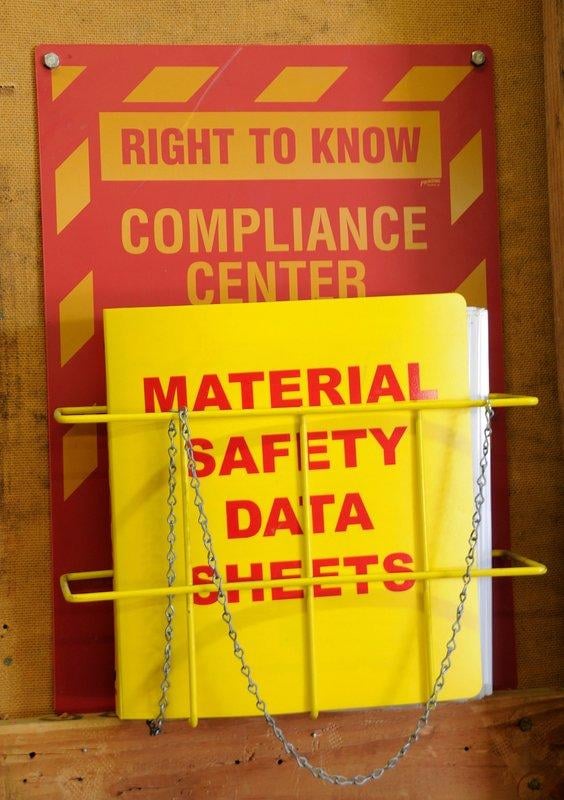
FAQs About Safety Data Sheets (SDS)
What is included in a Safety Data Sheet? A Safety Data Sheet (SDS) includes important information such as what each chemical consists of; the possible physical, health, and environmental health hazards; protective measures; and safety precautions for handling, storing, and the transportation of the chemical. What kind of products do you need to have an SDS on file for? Safety Data Sheets should be obtained for each hazardous chemical that is produced, imported, or used in the workplace. Some examples of products that you would need an SDS for would typically include paints, cleaners, solvents, sealants, lubricants, compressed gases, fuels, etc. Where do you keep them? It is recommended that SDSs are maintained in a hard copy log format which includes all applicable chemicals in that particular workplace. Multiple logs or additional copies of SDSs may be necessary to ensure that all employees have access to the information. In addition to or in replacement of a SDS log would be the use of an online system or database that houses your company’s Safety Data Sheet library. If you choose to use the electronic format, the SDSs must be readily accessible to all employees during each work shift while ensuring that no barriers exist to obtain the information. How long do you need to keep the SDS? It is often said that you need to keep applicable M/SDSs for 30 years, but if you choose not to, then you are only required by OSHA to keep record of the identity (chemical name if known) of the substance/agent and also the information about where/when it was used. Here is a link to a letter of interpretation that discusses the somewhat contradictory requirements of the Hazard Communication and Retention of Exposure Records standards. What is the difference between a MSDS and a SDS? MSDS refer to the acronym Material Safety Data Sheet while SDS refers to Safety Data Sheet. Although the name has changed, the required information has not. OSHA’s recent Hazard Communication standard revision incorporates a standardized, specific format for which SDS information must be presented in. This specific format is also aligned with the ANSI standard format and is widely used in the US. Can you convert a MSDS into the SDS? Can you write an SDS? The products’ manufacturer is the only responsible party for updating this material. If you are the manufacturer of the product, we recommend that you refer to OSHA’s website for guidance on the new SDS 16-section format, but also consult an SDS authoring service to ensure that all compliance needs are met. Lancaster Safety can help develop or update your company’s SDS log, just give us a call at (724) 776-1003!
-
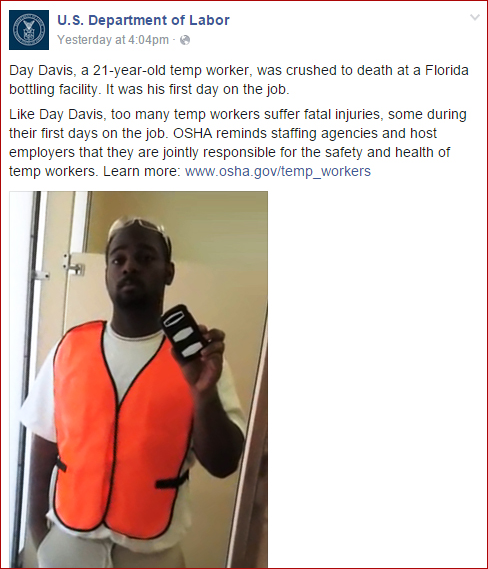
MultiEmployer Worksites – Who has Control?
MultiEmployer Worksites and the Role of Staffing Agencies WHY HIRE TEMP EMPLOYEES? Over the past 30 years it has become increasingly common for businesses, particularly manufacturing, to hire employees on a temporary status. This accomplished several objectives. It assisted potential employers to ‘try out’ the employees to determine if they had the work ethic necessary to succeed, to allow their staffing requirements to flex in accordance with their workload, and to off load some of the liabilities associated with workers and the production process.
-
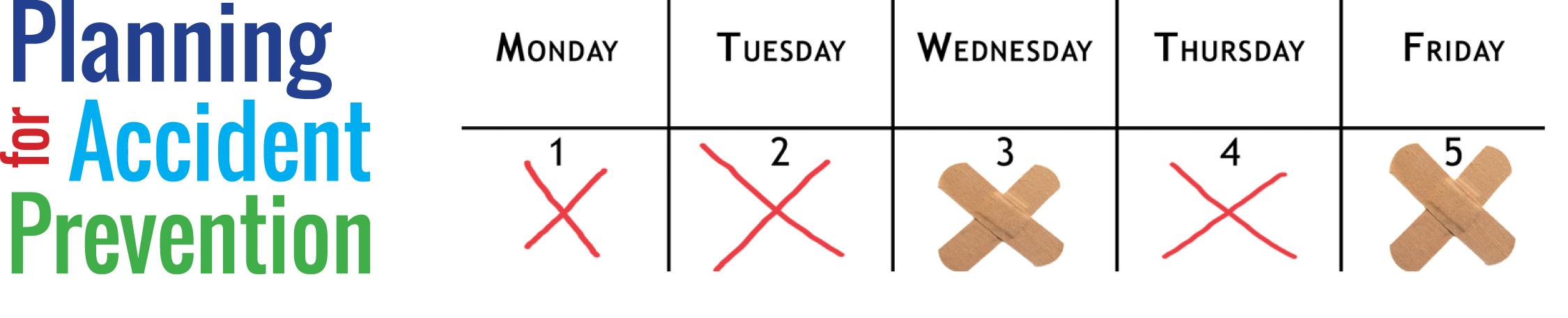
Planning for Accident Prevention
When planning for your day, you probably make a list of priorities, tasks, and items to be followed up on. Factoring in daily time to address workplace injuries and accidents is not typically a line written into a daily planner. Accidents are never planned, and it’s impossible to know when one will occur. However, it is possible to plan for accident prevention.
-
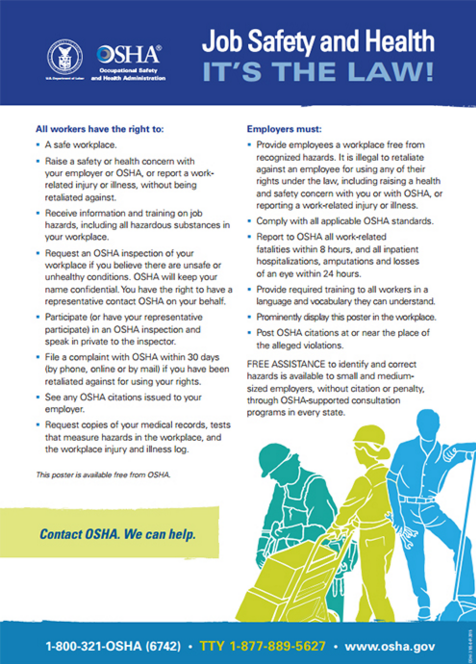
Are You Required To Post The New OSHA Poster?
OSHA’s Workplace Poster A popular question we’ve been receiving from our clients recently is asking if they need to replace their current OSHA Job Safety and Health Poster with the new version.
-
OSHA Ruling on Confined Spaces
Protecting Workers in Confined Spaces The rule will provide construction workers with protections similar to those manufacturing and general industry workers have had for more than two decades, with some differences tailored to the construction industry. These include requirements to ensure that multiple employers share vital safety information and to continuously monitor hazards – a safety option made possible by technological advances after the manufacturing and general industry standards were created.
-

Why Was I Inspected by OSHA?
Why Was I Inspected by OSHA? The mere utterance of the word “OSHA” may have some people running in fear of the unknown. OSHA was formed with the best intentions in mind – saving lives. However, in the years that they have been upholding their mission “to assure safe & healthful working conditions for working men and women,” some may have unjustly given OSHA a “bad rap” for their strict standards and high fines.
-

Why OSHA Supports Third-party Safety Consultants
“With the Occupational Safety and Health Act of 1970, Congress created the Occupational Safety and Health Administration (OSHA) to assure safe and healthful working conditions for working men and women by setting and enforcing standards and by providing training, outreach, education and assistance.” –OSHA’s Mission Statement
-
Get Inspected by OSHA With Confidence
Get Inspected by OSHA With Confidence Everyone has heard the cliché that the Occupational Safety & Health Administration (OSHA) does not leave an inspection empty-handed. If they show up conduct an inspection, they’ll find at least one violation, if not several. As safety consultants, Lancaster Safety Consulting, Inc. (LSCI) knows that this is simply not true. So how is a citation-free inspection possible and how can your company “survive an OSHA inspection”?
Subscribe
-

Safety Pays – Here’s How!
Safety is a word that can evoke a variety of thoughts and emotions. To company leaders, the word could mean “something that is not worth my time” to “an important investment in my company’s future.” It is this second group of like-minded business owners and CEOs that truly get the meaning of safety and take it to the highest level at their companies.