A top OSHA and worker safety blog from industry veterans. Read the latest OSHA news and find critical safety tips to keep your workers safe. Check Often!
OSHA News & Workplace Safety Blog
-
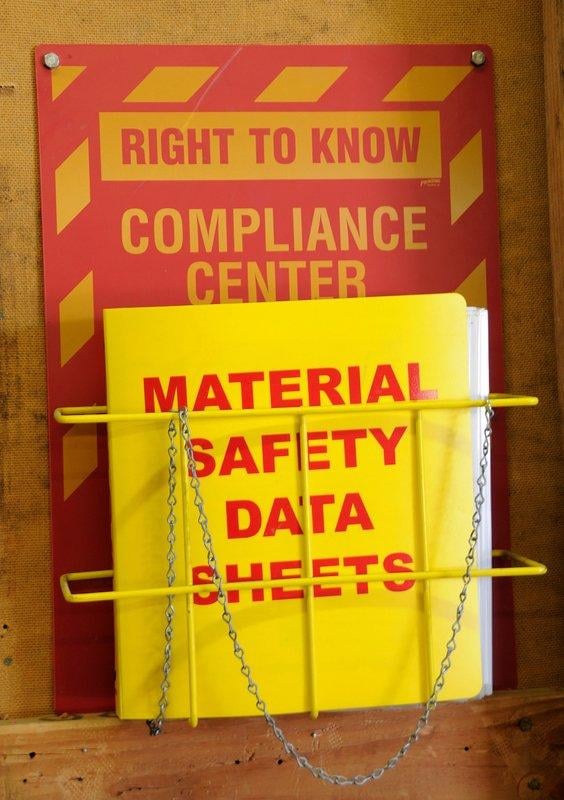
FAQs About Safety Data Sheets (SDS)
What is included in a Safety Data Sheet? A Safety Data Sheet (SDS) includes important information such as what each chemical consists of; the possible physical, health, and environmental health hazards; protective measures; and safety precautions for handling, storing, and the transportation of the chemical. What kind of products do you need to have an SDS on file for? Safety Data Sheets should be obtained for each hazardous chemical that is produced, imported, or used in the workplace. Some examples of products that you would need an SDS for would typically include paints, cleaners, solvents, sealants, lubricants, compressed gases, fuels, etc. Where do you keep them? It is recommended that SDSs are maintained in a hard copy log format which includes all applicable chemicals in that particular workplace. Multiple logs or additional copies of SDSs may be necessary to ensure that all employees have access to the information. In addition to or in replacement of a SDS log would be the use of an online system or database that houses your company’s Safety Data Sheet library. If you choose to use the electronic format, the SDSs must be readily accessible to all employees during each work shift while ensuring that no barriers exist to obtain the information. How long do you need to keep the SDS? It is often said that you need to keep applicable M/SDSs for 30 years, but if you choose not to, then you are only required by OSHA to keep record of the identity (chemical name if known) of the substance/agent and also the information about where/when it was used. Here is a link to a letter of interpretation that discusses the somewhat contradictory requirements of the Hazard Communication and Retention of Exposure Records standards. What is the difference between a MSDS and a SDS? MSDS refer to the acronym Material Safety Data Sheet while SDS refers to Safety Data Sheet. Although the name has changed, the required information has not. OSHA’s recent Hazard Communication standard revision incorporates a standardized, specific format for which SDS information must be presented in. This specific format is also aligned with the ANSI standard format and is widely used in the US. Can you convert a MSDS into the SDS? Can you write an SDS? The products’ manufacturer is the only responsible party for updating this material. If you are the manufacturer of the product, we recommend that you refer to OSHA’s website for guidance on the new SDS 16-section format, but also consult an SDS authoring service to ensure that all compliance needs are met. Lancaster Safety can help develop or update your company’s SDS log, just give us a call at (724) 776-1003!
-
OSHA GHS Hazcom Training
OSHA GHS Required Training & Deadlines OSHA has revised its Hazard Communication Standard to be in alignment with the Globally Harmonized System of Classification and Labeling of Chemicals (GHS). Major changes to the Hazard Communication Standard include the following: Hazard Classification Provides specific criteria for classification of health and physical hazards as well as classification of mixtures. Labels Chemical manufacturers and importers will be required to provide a label that includes a harmonized signal word, pictogram, and hazard statement for each hazard class and category. Precautionary statements must also be provided. Safety Data Sheets Will now have a specified 16-section format. Information and Training Employers are required to train workers by December 1, 2013 on the new label elements and safety data sheet format in order to facilitate recognition and understanding. For more information regarding this new Global Harmonization Standard please visit OSHA’s website. LSCI is committed to helping our clients meet this deadline.