A top OSHA and worker safety blog from industry veterans. Read the latest OSHA news and find critical safety tips to keep your workers safe. Check Often!
OSHA News & Workplace Safety Blog
-
2020 OSHA Penalty Amounts Increased
Understanding OSHA’s Penalty Adjustments Until five years ago, OSHA had not raised their penalty amounts since 1990. Now, with the Inflation Adjustment Act, OSHA is required to annually adjust penalty amounts by January 15th.
-
OSHA’s Emphasis on Amputations
Updated 12/17/19
-

Workplace Bullying Can Be Costly
Bullying Can Continue in Adulthood When the topic of bullying arises, many think back to those days as a youth where some nasty kid on the playground made life miserable for passive children who wanted no part of an altercation. The yellow-eyed villain Scut Farkus in the 1983 film “A Christmas Story” is the prototypical bully. In fact, his role was so iconic that the actor who played him, Zack Ward, now spearheads an anti-bullying campaign, using his role in the movie to create awareness about what bullying is and how to stop it. These days, the subject of bullying has become somewhat of a school administrator crusade as most no longer view it as “kids being kids” and bullying is taken very seriously. But surprising to some, bullying exists well beyond the confines of the schoolyard and happens to people of all ages and in all walks of life — including the workplace. According to a study by the Workplace Bullying Institute, 19-percent of U.S. employees have admitted to being bullied at their place of employment. Employees Are Dreading Work Due to Bullying Every single day, men and women go to work in this country with feelings of dread at the thought of facing their workplace bully or bullies. Sometimes people don’t even realize that this demoralizing workplace environment is indeed bullying. It can occur in a variety of ways including having a co-worker start rumors, dispense unfair blame, sabotage work, cyberbully, use profanity, dish-out undeserved punishment, implement unfair or changing deadlines, display physical or verbal intimidation, publicly ridicule a co-worker, and more. These are not normal workplace behaviors and should not be tolerated. How Can Employers Prevent These Behaviors? It is vital for employers to establish rules on how people are to be treated in the workplace and educate the staff on what is appropriate and what is not. Having written guidelines and taking the proper steps when bullying is reported is crucial. But without follow-through from owners, management and the human relations department, the behavior will almost always continue. Beyond it being a moral issue, bullying has financial ramifications. Employers must take this seriously because it can hamper a business significantly as affected employees have a tendency for missed days of work, can be anxious or even depressed which can lead to decreased productivity. These factors can result in high employee turnover, and can even have multimillion-dollar legal ramifications. Making supervisors and the HR department aware of bullying is key, but some are afraid to say anything, especially if the bullying is coming from a supervisor. Due to the fear of being out of work, some employees simply endure bullying from the boss. The angst of being without a job is a very real factor in people just accepting the treatment as part of their work life. Standing Up for Yourself is Your Right It’s never easy to confront a bully. All bullies, no matter what age, rely on people backing down. But that old adage of not wanting to be a tattletale is an archaic philosophy because nobody has the right to expose you to negativity and ridicule, particularly while you are trying to make a living for yourself and your family. The key is to stand up for yourself in a calm manner. There is no need to sink to another person’s level. If, after calmly asking your bully to stop the inappropriate behavior, it continues, then your conscience can be clear and it is time to report the situation to the supervisor and/or the HR department. Curb Conflict; Avoid Bullying Most employers recognize that a hostile work environment will affect a company negatively. That’s why they need to take steps to curb conflict among employees that goes beyond a normal, working environment. People can disagree without it descending into something ugly. When it crosses that line, all complaints must be addressed and recorded. Workers need to understand what is expected and that there are consequences to bullying or harassment. A policy needs to be in place to not only protect employees but also the company. Employers unsure how to proceed should seek outside help to educate themselves on this subject. Consulting an employment attorney is a great first step to sustaining a healthy and productive work environment. Businesses put great effort into making sure workers are free from physical harm. It’s equally important that employees are free from emotional harm as well. OSHA provides many resources and prevention measures on its website regarding bullying and workplace violence. If you’re experiencing this in your own workplace, call us today at (724) 776-1003 for more information!
-

What Does A Safety Consultant Do?
What Does a Workplace Safety Consultant Do? A Safety Consultant is a trained and certified health and safety professional who does two very important tasks: (1) keep workers safe by assessing and eliminating workplace safety hazards, and (2) help businesses comply with complex state and federal occupational workplace regulations, such as OSHA standards. Safety Consultants are sometimes referred to as “OSHA Consultants” given that complying with OSHA standards means you are keeping employees safe. “I would say that a Safety Consultant is defined by one word: support.” Who Can Safety Consultants Help? Companies from all industries come to Lancaster Safety in all stages of their safety journey. New companies that just hired their first employee, to established businesses with 30+ years in the Construction industry and 100 employees; we help them all! Our Safety Consultants have either worked directly in the field or have experience with specific parts of the safety field, but they all hold the same common goal: support the client through the entire process. “Safety cannot be managed or accomplished by one person or a consultant – it is everyone’s job!” Why Should You Hire a Third-Party Safety Consultant? OSHA regulations are intricate and complex rules that can be overwhelming for one person to understand and be responsible for. There are always new rules and regulations to stay on top of and potential changes to keep an eye on. Whether you are a business owner, member of management with some safety responsibilities, or even a safety officer, you can always ask for help! Moreover, we work with hundreds of clients of all different sizes, industries, and specialties. Our breadth of experience and exposure to numerous potential hazards means your situation is probably something we’ve already seen and can immediately help with! While our collaborative experience is extensive, safety is always improving and evolving so our Safety Consultants learn something new every day. But we don’t stop there… true employee safety means a proactive safety culture and commitment by everyone at your company. We have the tools and experience to motivate, train, and engage your employees so that safety is taken seriously by all. “…my purpose is to help companies improve upon both their safety program and culture by assisting with various aspects of health and safety.” What Services do Safety Consultants Provide? Safety Consultants have many responsibilities and provide services such as: Conduct Hazard Inspections Write OSHA-compliant Safety Programs Train Employees on OSHA-required Topics Provide OSHA Citation Assistance Conduct Contractor Prequalification Compliance Tasks (eg. ISNetworld) Facilitate OSHA Recordkeeping & Submission Create a Positive Company Safety Culture Safety never stops, so neither do our safety consultants! They work constantly to assist in whatever ways they can. What are the Top 10 Reasons to Hire a Safety Consultant: Professionals with various certifications and qualifications that know OSHA’s rules and regulations. Get a hazard assessment conducted before you risk getting OSHA citations. Get safety and health training for your employees delivered on just the topics you need. Cheaper than hiring a full-time safety person… and we can provide assistance to an overloaded safety manager. It shows your employees that you truly care about their safety and well-being which will boost morale! Gives you the peace of mind knowing you have experienced support available and shows OSHA that you are operating in good faith. Get real-time safety and health news alerts and OSHA regulation changes. Helps create a safer workplace for your employees and builds a safety culture. Will help prevent or reduce accidents, injuries, and potential OSHA citations. OSHA can offer employers a “good faith” discount for hiring a safety company! We’d love to partner with you along your safety journey! If you are in a position to handle workplace safety responsibilities, but need some help, or you are starting from nothing, we’ve got you covered! Call us today at (724) 776-1003 or submit a contact form for a free, no obligation consultation! We also invite you to subscribe to our blog as well as our monthly webinars, which are always free!
-
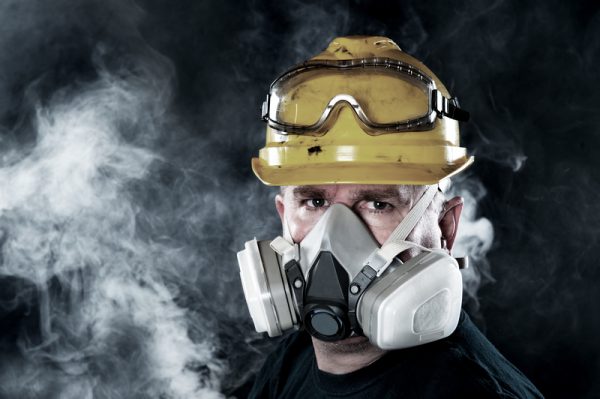
OSHA Final Rule: Respirator Fit Testing
-

An Open Letter to Anyone Who Doesn’t Take Safety Seriously
How Following OSHA Rules — and Taking Safety Seriously — Saves Lives in the Workplace When a worker was killed after a crane fell, crushing the man, an OSHA inspection showed that the accident could easily have been avoided by extending outriggers designed to keep the crane from tipping. It was a simple step that would have only taken a few moments to put in place and would have saved that man’s life. In total, OSHA found 13 serious violations during that inspection, levying $70,000 in fines on the company. But for that employee, no amount of fines will bring his life back. On that day, he left home that morning, having no idea he would never come home again. A tragedy that never should’ve happened. The Facts Don’t Lie Since OSHA began in 1970, the lives of hundreds of thousands of workers have been saved. The year before OSHA was created, there was a little more than 56 million workers in the United States and 14,000 of them died on the job annually. Today, the number has swelled to more than 163 million workers, yet there are 9,000 fewer workplace deaths annually, even though the workforce has more than doubled. This is a testament to the fact that inspections work. While the rate of fatalities in the workplace have been diminished, there is still a long way to go. OSHA rules are put in place for a reason, but those rules are only as good as the people who implement them. Following operating instructions, training employees and supervising the work is vital in keeping your workers safe. Ignoring them can have deadly consequences. Once a hazard is identified, that is only the beginning of the process. The real work involves continued diligence in the form of education and inspections to make sure employers and workers are adhering to established safety protocols — or face the penalties. Raised Penalties Equal Higher Standards for Safety In 2019, OSHA enforcement raised the penalties to $13,260 per violation (up from $12,675), $132,598 for repeat or willful violations (up from $126,749). But not all companies have to face penalties before taking action. In fact, more and more business owners have seen the positive impact of safety inspections and have even begun participation in OSHA’s Voluntary Protection Programs. These are companies that have improved workplace safety in a proactive manner, seeking to head off hazards before they ever arise. If we don’t learn from past mistakes, we are doomed to repeat them again. Prior to 1970, workplace regulations were less stringent, and in many cases, non-existent, something that resulted in the preventable death of thousands, such as March 25, 1911, when a fire broke out in the Triangle Shirtwaist Factory in New York City, and on April 16, 1947, in what has become known as the Texas City disaster. These days, thanks to OSHA regulations and tools, not only are evacuation routes mandatory and substances like ammonium nitrate known to be hazardous, but OSHA continues to release updated information and policies to ensure complacency never sets in. Not using this knowledge to improve safety is intolerable. Instead of looking at the workers simply in terms of cold statistics, perhaps we should be looking at them as husbands, wives, sons, daughters and friends. Perhaps then the importance of each and every person’s life can truly be appreciated and protected.
-
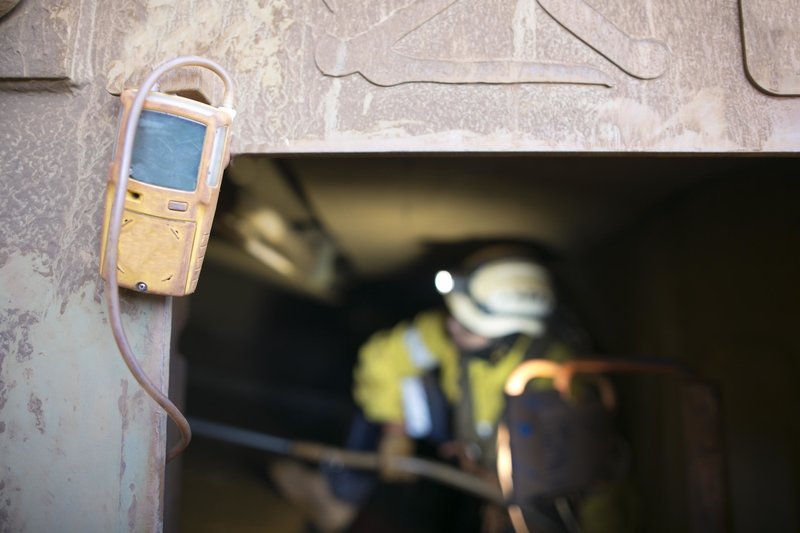
Confined Spaces: Seeing Beyond the Entry
When it Comes to Confined Spaces, There’s No Room to Skip on Safety Precautions. In January 2017, a utility worker in Key Largo, Florida, opened a manhole cover and went under a recently paved section of road to investigate why it had settled unevenly. When he stopped responding to coworkers above ground, a second worker went in to see if he needed help. When both stopped responding, The Washington Post reported, a third man entered. What none of these workers knew is that years of vegetation had been rotting underneath the surface, creating a poisonous gas. All three workers were overcome by hydrogen sulfide and methane, causing them to asphyxiate. These three men lost their lives and two firefighters sustained injury that required medical attention because the danger was not identified before entering. While many people wouldn’t consider working in a confined space as a work hazard, this situation in Key Largo — as well as numerous multi-million dollar settlements — beg to differ. Confined space work is often dangerous because the hazards that exist aren’t obvious. But without due diligence, these unseen issues can escalate into a deadly situation in seconds, which makes proper training crucial. Tunnels, storage tanks, culverts, grease pits, trenches, shafts, crawlspaces and manholes are just some of the places that fit into the category of a confined space. What is Considered a Confined Space in the Workplace? A confined space is an area that is a small space with limited entry or exit points. It is large enough for an employee or employees to enter and work, but is tight and not designed for long-term occupancy. OSHA has two classifications for these work environments. They are non-permit confined spaces and permit required confined spaces. OSHA explains it like this. A non-permit required space has all of the descriptions above. While a permit required confined space has all of the above descriptions as well as at least one of the following hazards. Contains or has the potential to contain a hazardous atmosphere. Has walls that converge inward or floors that slope downwards and taper into a smaller area that could trap or asphyxiate an entrant. Contains any material/substance that poses an engulfment/entrapment hazard. Contains or has the potential to contain any other serious safety or health hazard. Spot the Dangers Before They Spot You. Dangers that exist in a permit required confined space include, but aren’t limited to, asphyxiation due to limited oxygen or hazardous gases, explosion, electrocution, engulfment, moving machinery, collapse, rescuers being injured, and falls. Failure to classify an area as permit required and taking the proper precautions can be costly to the worker and has the potential to financially ruin a company. Whether physical or atmospheric, the dangers of confined space work cannot be ignored. Neglecting to inspect, monitor and address potential hazards before and during work cannot be tolerated. Every year, lives are lost while working in these small spaces. On average, two workers a week in the United States will die after entering a confined space to work. But it doesn’t have to be that way. Training Doesn’t Just Educate Employees, It Can Save Lives. Through proper training and certification, workers can greatly reduce and even eliminate the risk of fatalities. A trained crew evaluates and understands the hazards they may face and communicate these dangers with each other. If the hazard cannot be removed from the work space, proper precautions and equipment must be utilized to keep the worker safe until the job is completed. It is vital that the workers inside the confined space are in constant communication and monitored from outside where the team understands the dangers and remain alert for any symptoms of distress so an immediate extraction can be implemented at the first sign of trouble. Trained workers also know when to call for emergency assistance in the event that a worker is adversely affected by seen or unseen hazards. Getting timely treatment for a person is often crucial in ensuring a faster recovery. Experts caution to take the time to put safety protocols in place. After all, nobody wants a confined space to turn into a final resting place. For all of your training needs, call us today at (724) 776-1003 or visit our Services Page!
-

Safety After an Accident
-

Beat the Heat – Safety Cheat Sheet
Keeping You and Your Crew Safe As the summer months get into full swing, heat stress and other heat-related illness become a concern for workers across the country. Heat stress can lead to heat stroke, heat exhaustion, heat cramps, or heat rashes. Heat can even increase the risk of injuries in workers since it can lead to sweaty palms, fogged-up safety glasses, or dizziness.
-

Mental Health in the Workplace
A Trillion Dollar Topic Considered a taboo subject in the workplace 30 years ago — something that was talked about in hushed tones around the water cooler and often referred to incorrectly as “a nervous breakdown” — the truth is that anxiety, depression and other mental health disorders are no longer looked upon with the same scrutiny as years past. Mental Health challenges are now recognized as very real, very treatable, and things very normal people deal with. Fortunately, there is a wealth of options available these days to help people overcome these issues, but getting employees to actually use these resources can prove difficult. According to the World Health Organization, more than 300 million people suffer from depression, the leading cause of disability, costing an estimated $1 trillion annually in lost production. Whether it is lack of productivity while on the job, or absenteeism, a company’s bottom line is negatively affected when an employee is under mental duress. For this reason, more and more companies are realizing the financial benefits of improving employee wellbeing. Breaking the Stigma Forward-thinking companies recognize that investing in employee mental health is every bit as important as physical health. But because of the stigma attached, it’s not always easy for an employee to open up about their struggles with supervisors or other co-workers. Often this barrier can be removed when a corporate leader opens up about their own issues, creating a safe environment for people who no longer feel the need to hide these issues. Sometimes, just the relief of not having to try to hide it anymore actually relieves some of that anxiety. It can actually be liberating, particularly when you discover you are not alone and learn that some of the people you interact with every day have dealt with or are currently enduring the same problems. There’s an untapped strength in admitting it and facing it head on. Whether it’s anxiety disorder, depression, attention deficit/hyperactivity disorder, bipolar, or any number of mental challenges, all can be improved with professional help. Postpartum depression, Seasonal Affective Disorder or Post-injury depression are all recognized conditions that respond well to treatment. How an Injury Can Affect Mental Health Post-injury depression for instance is an under-reported, yet very prevalent condition. Anxiety over the injury, lost wages and worrying about whether their job will remain when they return are very real concerns. Companies with solid policies for employees on leave are vital in the recovery process, including keeping in regular contact with the injured employee so this person knows they are not forgotten. Spreading Awareness in the Workplace Most businesses in this day and age take mental health issues seriously, addressing the hazards of stress, fatigue and anxiety. Making managers and employees aware of the signs of a coworker struggling, such as weight changes, withdrawing from others, changes in appearance or attitude, are all very important. Identifying the issue and having a solid plan in place so help can be offered promptly is vital to recovery. But the employer can only do so much. Reports show that less than half of the people who could benefit from mental health treatments available to them actually take advantage of it due to an antiquated feeling of embarrassment that is a remnant from a way of thinking that is decades old. Put quite simply, Mental Health needs rebranded so that everybody feels comfortable enough to seek help when needed so they can live life to its fullest.
Subscribe
-
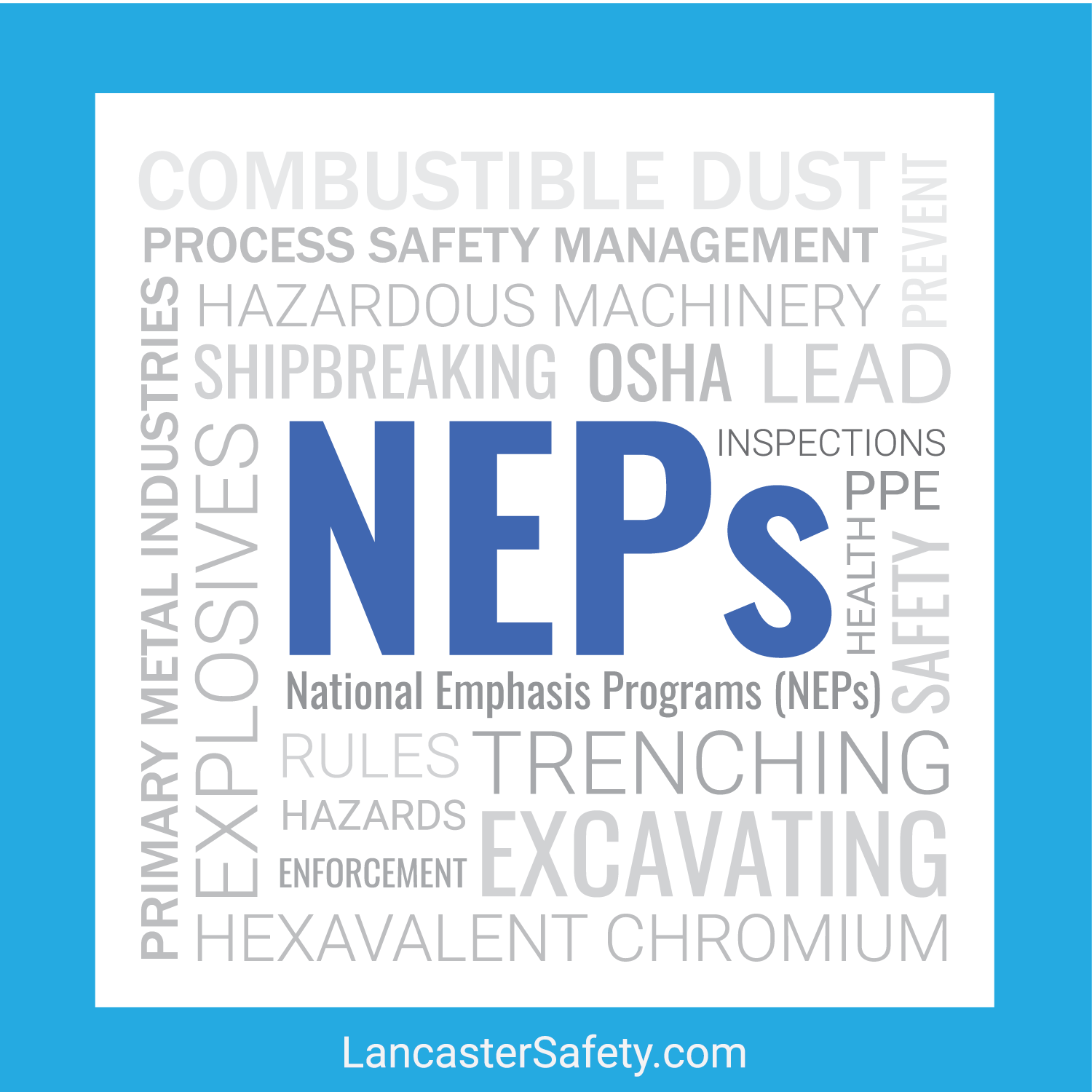
OSHA’s National Emphasis Programs
High Risk Industries OSHA is Targeting for Inspections Many have heard about National Emphasis Programs (NEPs), but few actually understand just how far-reaching these programs are and what they are actually designed to accomplish. These are temporary programs that allow OSHA to concentrate their resources on specific hazards, both existing and new, in an effort to curb and hopefully eliminate the rate of occurrence. By using the latest data and resources available to evaluate specific hazards and focus on solutions, the goal is to identify potential risks and put protocols in place to secure the safety of the workplace. OSHA provides compliance assistance resources in the form of printed, online, video and audio instruction on safety for both employers and employees to ensure a safe work environment. Here are some examples of what the National Emphasis Program is all about: Combustible Dust has been a point of emphasis for OSHA. Defined as material composed of particles that present fire or deflagration hazards, every year workers are injured from combustion. In this type of situation, the National Emphasis Program directs experts to examine the results from accidents, conduct inspections and create a plan to address that specific hazard in an attempt to eliminate potential safety threats. A National Emphasis Program can focus on a variety of scenarios, such as Hazardous Machinery and the dangers of amputations for workers. Even in an instance where no accident has occurred, by just exposing employees to hazards, a company is subject to substantial fines and penalties. Currently, OSHA has a program that will continue through at least September, with a goal to reduce risks for people who work around dangerous machinery, including ongoing training and warning signs. Shipbreaking has long been a focus of OSHA as they constantly update protocols to ensure the safety of workers in shipyards. The goal is to protect employees from a bevy of hazardous materials during the dismantling and recycling of ships, such as asbestos and lead exposure, among many other dangers. Safety Issues can be Anywhere Risks aren’t simply limited to inside factories or on company property. Safety issues can exist anywhere and employers must be aware of the potential dangers and address them or face the consequences. According to OSHA, a recent spike in trenching fatalities prompted the National Emphasis Program into action. Exposing workers to unsafe cave-in risks while working in or inspecting trenches has deadly consequences every year. Trench collapse is a daily risk on building sites around the world. Invisible threats are also a focus of OSHA as unseen dangers that have long term effects Dangers of Chromium 6 Made famous in the movie Erin Brockovich starring Julia Roberts, hexavalent-chromium, also known as chromium 6 which is a rust suppressor, ended up contaminating the drinking water in a California town with potentially toxic carcinogens. The case gained national headlines and resulted in a settlement for a staggering $333 million. The dangers involved with this material has been recognized and is another example of what the National Emphasis Program does as the hazards of chromium 6 is now recognized and addressed. Whatever the risk or situation, at any given time, there might be a dozen National Emphasis Programs in action, each designed to address the ongoing and ever-changing hazards in the workplace. Will your workplace be next? Be proactive when it comes to safety! Schedule a mock OSHA Inspection with us at your workplace!